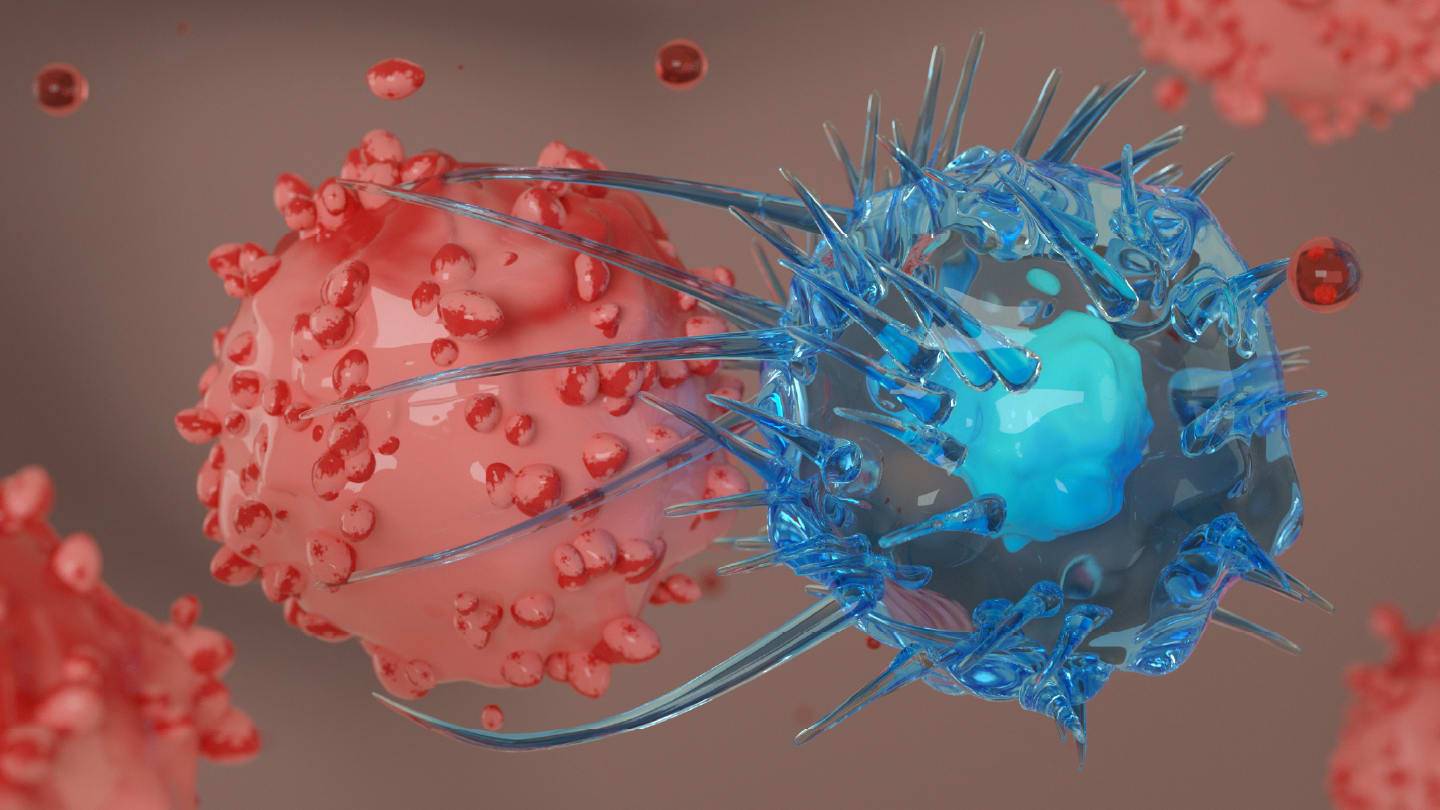
Why do some patients experience durable responses to CAR T cell therapy while others relapse? New research suggests that part of the answer may lie in the composition of the engineered cells themselves.
A multicenter analysis has identified a strong association between the proportion of naive-like T cells in CAR T cell products and progression-free survival among patients with non-Hodgkin lymphoma. The findings could help inform how cells are collected, selected, and manufactured for future therapies.
Researchers analyzed CAR T cell product characteristics from 580 patients treated with axicabtagene ciloleucel (axi-cel) across multiple clinical trials. With a median follow-up of 41.9 months, the analysis examined how different T cell populations related to treatment response, disease progression, and safety.
Among the characteristics evaluated, a higher proportion of naive-like T cells – identified by the surface markers CCR7 and CD45RA – showed the strongest association with prolonged progression-free survival.
Patients whose CAR T cell products contained the highest proportions of these cells had a 54 percent lower relative hazard of disease progression or death compared with those in the lowest group. Ongoing response rates were also higher, at 59.3 percent versus 29.2 percent, without an observed increase in the severity of cytokine release syndrome or neurotoxicity.
The association remained significant after accounting for established prognostic factors, including tumor burden, systemic inflammation, and CAR T cell expansion. It was also independent of tumor microenvironment characteristics assessed in a subset of 112 patients.
The researchers validated the findings in an independent cohort of 203 patients treated with axi-cel-based therapies or brexucabtagene autoleucel. Further analysis of CAR T cell products from 116 patients identified a CD8 T cell population with naive-like features and low expression of exhaustion markers, including PD-1, LAG-3, and TIGIT, that was associated with longer progression-free survival.
The study also revealed an inverse relationship between previous treatment exposure and naive-like T cell proportions. Patients who had received more lines of therapy tended to have fewer naive-like cells in both their collected starting material and final manufactured CAR T cell products.
Although this finding supports investigating earlier intervention, the proportion of naive-like cells in the final product was more strongly associated with treatment outcomes than their proportion in the starting material.
For cell therapy developers, the results suggest that manufacturing strategies designed to preserve or enrich less-differentiated T cells could help improve treatment durability. However, the analysis establishes associations rather than causation, and further studies are needed to determine whether modifying product composition can directly improve clinical outcomes.
The findings also may not extend to all CAR T platforms, as the analysis focused on CD28-based products in patients with lymphoma.
Newsletters
Receive the latest pharmaceutical news, personalities, education, and career development – weekly to your inbox.