Scientific innovation continues to drive biotech and biopharma forward, but the path from promising idea to viable therapy is becoming more complex. New modalities are placing greater demands on development and manufacturing, while funding pressures, regulatory expectations, supply chain risks, and the economics of commercialization are forcing companies to think differently from the earliest stages.
For Biopharma Vital Signs, we asked industry leaders for their views on the state of biotech and biopharma today – including the conversations likely to dominate BIO 2026, the trends shaping development, and the pressure points that could determine which therapies successfully reach patients. Explore the full Biopharma Vital Signs series here.
In Part 2, we ask:
What trends are currently shaping the way biotech and biopharma companies approach development, manufacturing, and commercialization?

Tony Thomas, Director, Technical Consulting, Ecolab Bioprocessing; and Fiona Stack. Global Technical Consultant, Ecolab Life Sciences
We’re seeing a real shift in how companies think about the full journey from development through to commercialization.
On the science side, molecules are becoming much more complex, particularly with formats such as bispecifics and fragments. That’s putting pressure on traditional development and manufacturing approaches, especially in downstream purification.
At the same time, there’s no getting away from economics. Companies are under pressure to improve productivity and reduce cost of goods, particularly as purification can account for a large share of manufacturing cost. That’s why there is so much focus on process intensification and platform approaches that help teams scale more efficiently without adding unnecessary complexity.
Those decisions are increasingly shaped by what it takes to succeed commercially. It’s not just about proving the technology. It’s about getting to market faster, securing supply, and making sure therapies can be produced at a scale and cost that supports access. There is also a growing awareness that manufacturing has to work for people as well as processes. In areas such as contamination control, solutions need to be effective but also practical for operators to use day to day.
Overall, the industry is trying to balance innovation with what it takes to make that innovation commercially viable.

Alison Clayton, Strategic Projects Director, Symbiosis Pharmaceutical Services
One of the most significant trends is the increasing complexity of therapeutic pipelines. Biologics, advanced therapies and specialized injectable medicines are placing new demands on development and manufacturing, requiring highly specialized expertise to support successful progression from early development through to commercial supply.
We’re also seeing a shift in how companies approach outsourcing and partner selection. Rather than simply looking for capacity, many sponsors are prioritizing partners with deep technical knowledge and proven experience within specific modalities. The ability to navigate complexity, manage risk and provide practical development insight is becoming an increasingly important differentiator.
At the same time, the funding environment remains challenging, particularly for emerging biotechs. Investors and stakeholders are placing greater emphasis on capital efficiency and the ability to demonstrate a credible path to commercialization. This is encouraging more companies to think more carefully about manufacturability, scalability and long-term product viability alongside scientific innovation.
Finally, resilience continues to be a major focus across the industry. Geopolitical uncertainty, supply chain disruption and capacity constraints have reinforced the importance of building flexibility and risk mitigation into development and manufacturing strategies. Increasingly, success depends not only on advancing innovative science, but on creating robust pathways that can reliably deliver therapeutics to patients.

Oystein Soug, Chief Executive Officer, Oncoinvent
Biopharma is rapidly shifting toward more complex therapeutic modalities – such as cell and gene therapies, antibody-drug conjugates (ADCs), and increasingly, radiopharmaceuticals, which are emerging as a key pillar in oncology.
At the same time, companies are becoming more integrated and data-driven, aligning development, manufacturing, and commercial strategy much earlier in the process. Manufacturing and supply chains are no longer viewed as operational functions alone, but as strategic capabilities, with a growing emphasis on resilience, flexibility, and regionalization.
On the commercial side, mounting pricing pressure and increased regulatory scrutiny are forcing companies to rethink launch strategies and place greater emphasis on clearly demonstrating value to payers, providers, and patients.

Jeremy Skillington, CEO, Poolbeg Pharma
From the development perspective there is a clear, current trend that Pharma companies are acquiring clinical stage programs discovered and developed in China. In the past China was a cost-effective option for manufacturing but they have significantly advanced their drug development capabilities generating compelling clinical data from novel, innovative products – and Pharma are willing to pay significantly to access these program.
For manufacturing it will be interesting to see the impact of Trump’s tariff threats and commitment of many Pharmas to invest in US based manufacturing plants. These plants typically take many years to build and validate by which time Trump will be out of office and the threats will have expired. The stated commitments may fall away.
Commercialization will always be efficacy based and there will need to be a compelling case for insurance companies to pay for newly approved drugs. Pharma will have to work hard to fill the revenue gaps that will be created by expiring patents.

Marjorie Sidhoum, Vice-President Business Development & Corporate Communication, Kainova Therapeutics
The industry is increasingly prioritizing programs grounded in strong biology, precise pharmacology and a credible path to the clinic, particularly in immunology, oncology, inflammation and metabolic disease. Development models are becoming smarter and more adaptive, with biomarker-anchored designs, earlier manufacturability assessments and partnerships built around early co-creation to accelerate translation. AI is also shifting from experimentation to practical use in molecule design and trial optimization, enabling faster, data-driven decisions.
On the commercialization side, differentiation is now critical, and companies are emphasizing mechanisms with clear biological logic and evidence packages that support strong positioning. In complex diseases where patients have not responded to SOC, the most compelling opportunities align mechanistic depth, translational relevance and commercial fit. For GPCR-focused biotech, this means advancing beyond classical activation toward more precise modes of receptor modulation, including biased compound strategy, pathway-selective approaches to address difficult biology and strengthen the value proposition for patients and partners.
Sam Cobb, CEO, Currus Biologics
One of the most important trends is the shift toward therapies that are more programmable, scalable, and accessible. In cell therapy, this includes continued innovation beyond traditional ex vivo manufacturing models, including approaches that may one day engineer therapeutic activity directly inside the patient. These advances reflect a broader industry priority: making powerful cell-based therapies more practical, more scalable, and more accessible to patients.
Traditional cell therapy has shown what is possible biologically, particularly in hematologic malignancies, but it has also exposed real limitations: individualized manufacturing, long treatment timelines, high cost, restricted patient access, and limited demonstration of efficacy in solid tumors.
The key question is not only whether a platform is novel, but whether it solves a meaningful clinical problem. In solid tumors, companies need to think about biology, tumor access, persistence, potency, safety, manufacturability, and commercial scalability together.

Kevin Schaab, Sr. Drug Development Consultant; and Brad Rowe, Senior Director, Integrated Development; Quotient Sciences
Schaab: Biotech companies are increasingly adopting asset-specific development strategies, with a focus on generating early clinical data that directly informs next steps such as dose selection, regulatory positioning, and patient trial design. In a constrained funding environment, early data must reduce uncertainty and support regulatory interactions, two critical points in order to unlock additional funding.
Rowe: From a CMC standpoint, this is translating into a need for more deliberate early-phase decisions around formulation and manufacturability. There’s increasing pressure to select fit-for-purpose dosage forms while also considering scalable processes early to avoid rework as programs progress.

Mike Ford, Director of Sales and Business Development, Kindeva
The soaring global demand for GLP-1 therapies is making the manufacturing of sterile injectables more complex than ever. Successfully navigating the stringent aseptic requirements and evolving regulatory expectations associated with these products requires significant specialized investment. Siloed development and manufacturing workflows can multiply risk by increasing contamination potential, causing tech transfer misalignments, complicating compliance, and slowing timelines. This environment is prompting companies to think more carefully about how development, fill finish, and supply planning are connected.

Greg Plunkett, CEO, Accelagen
Biotech and biopharma companies are increasingly shaped by three forces: the use of AI to accelerate early development, earlier integration of commercial strategy, and the need to maintain rigorous quality and regulatory standards as technologies become more complex.
AI and large language models are helping teams move faster from concept to candidate selection by improving decision-making, surfacing risks earlier, and reducing time spent on low-value experimentation. However, these tools do not replace experienced scientific and development leadership. Critical decisions still depend on people who can interpret the data in the context of clinical, regulatory, and commercial reality.
At the same time, companies are being pushed to define their target patient population, product profile, and market positioning much earlier. One persistent gap is that pricing, reimbursement, and payer expectations are still often considered too late. Companies that address these issues earlier are generally better positioned for both development efficiency and commercial success.
As therapies become more technically sophisticated, the fundamentals remain unchanged: the product must be high quality, safe for patients, and capable of delivering meaningful clinical benefit.
For leadership teams, the challenge is to stay agile while maintaining the controls needed to satisfy regulators, investors, and future commercial partners.

Arya Mehrabanzad, Principal, Ampersand
The higher-level themes shaping drug development and commercialization right now are AI utilization, FDA uncertainty, drug pricing pressures, and supply chain challenges. Of course, everyone is talking about AI and exploring ways it can enable, accelerate, and streamline each step of the drug development and commercialization continuum. Recently these conversations have all been about the promise of AI, but we’re now seeing demonstrations of real returns, and I suspect that will be a theme in the hallways of BIO. At the same time, in 2026 the operational and policy environments have become just as important as science. In my opinion, companies that are best prepared for success over the next 3-5 years are those prioritizing supply chain resilience, pricing strategy, manufacturing flexibility, and regulatory navigation.
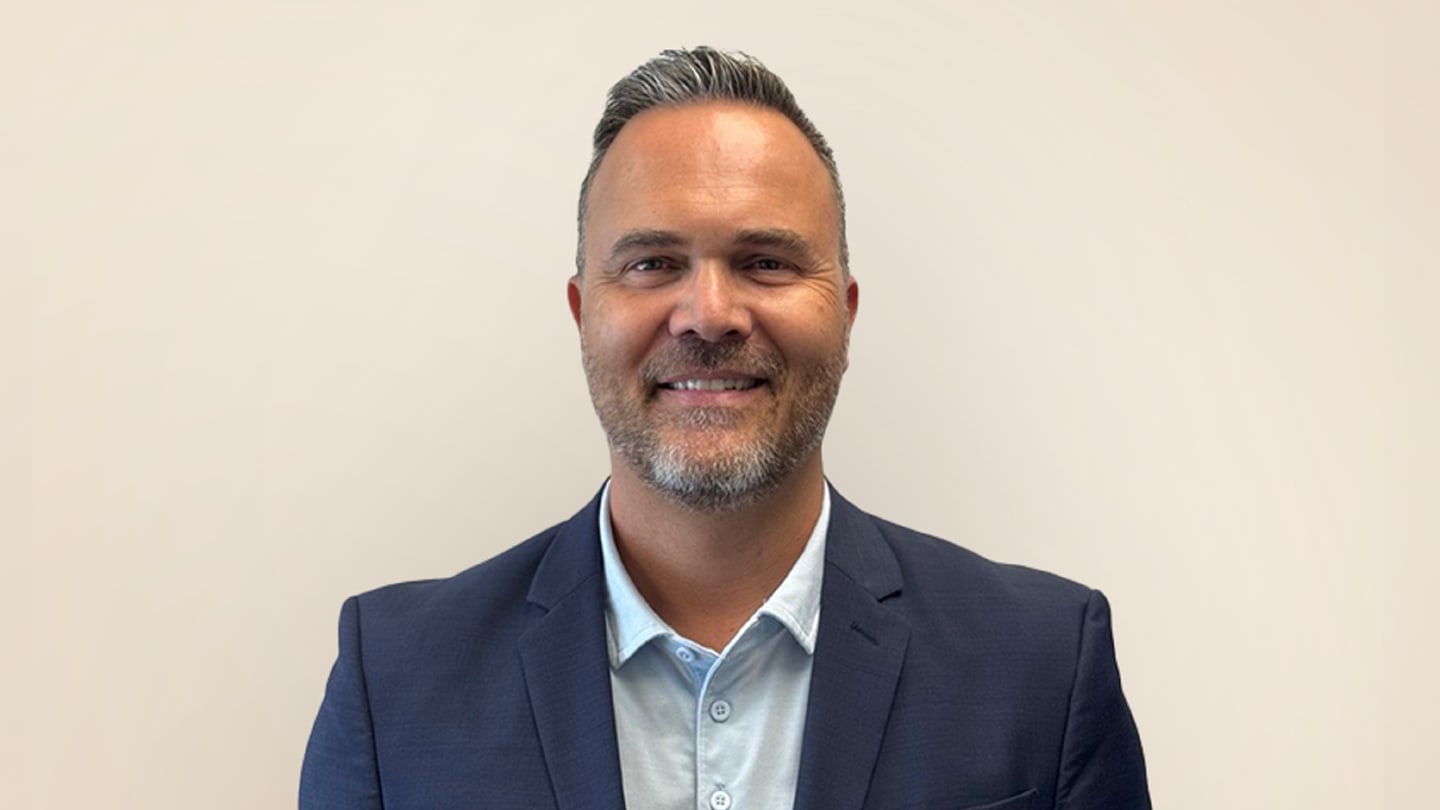
David Claveau, Vice President, Business Development, North America, Sygnature Discovery
Biotech and biopharma companies are being forced to connect decisions much earlier across discovery, development, CMC and commercial strategy. Capital remains selective, timelines are under pressure, and investors increasingly want evidence that a program can translate, differentiate and scale before major spend is committed. That is changing behavior: teams are prioritizing stronger target validation, earlier developability thinking, more rigorous translational plans, and clearer go/no-go criteria. At the same time, AI, automation and data-rich experimentation are becoming practical tools rather than abstract promises, especially where they shorten design-make-test-analyze cycles or improve decision quality. The other major trend is resilience. Geopolitical uncertainty, China’s rise as an innovation engine, supply-chain risk and modality complexity mean companies need flexible partner networks rather than fixed, siloed operating models. The winners will be those that combine scientific depth with operational adaptability – moving quickly, but not at the expense of quality.
Newsletters
Receive the latest pharmaceutical news, personalities, education, and career development – weekly to your inbox.