Sample stability storage sounds straightforward – place a sample in a controlled environment and monitor it over time. In reality, it is a tightly managed process that resides at the intersection of science, engineering, and regulation. Small variations in temperature, humidity, or handling can have outsized effects on molecular integrity, while long-term consistency must be proven, not assumed.
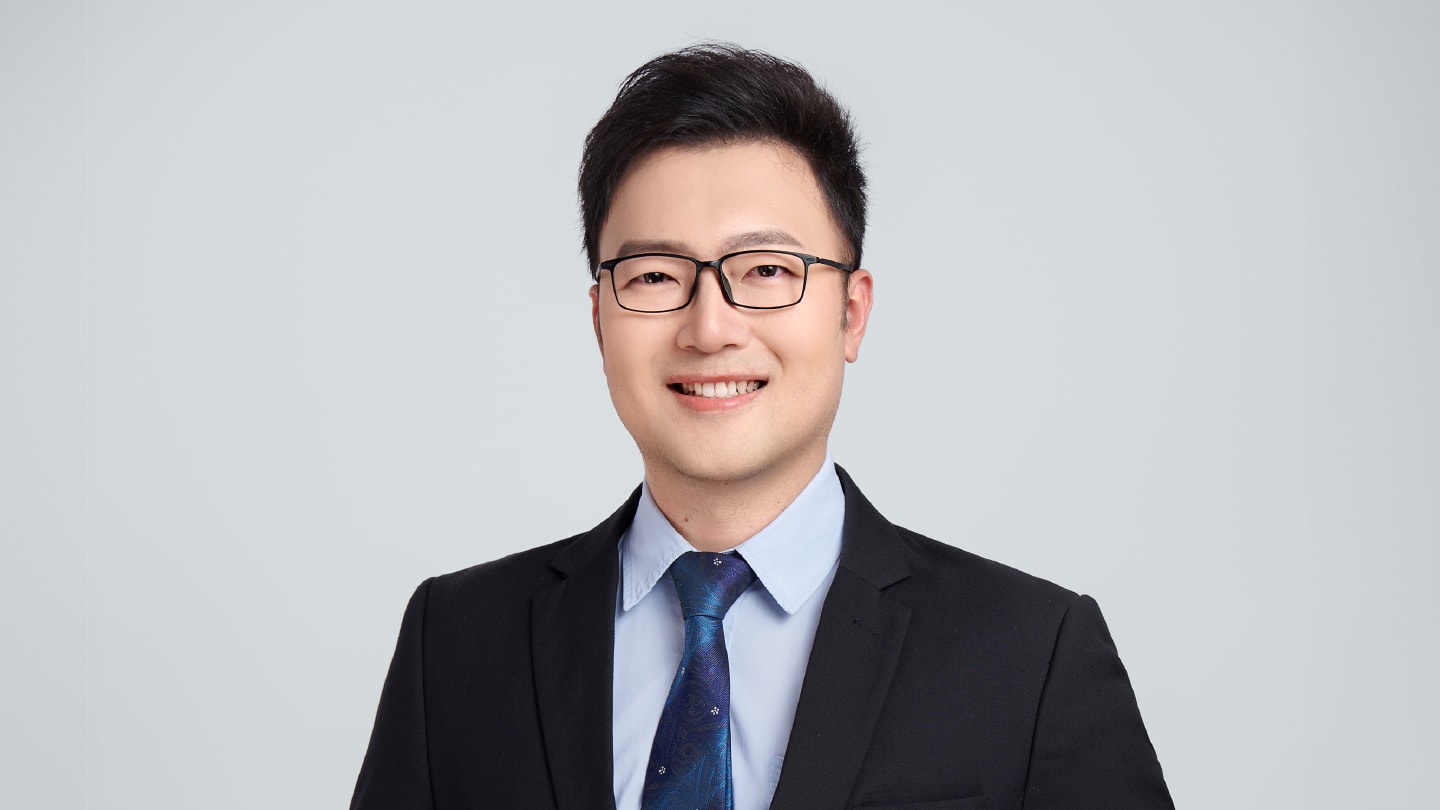
Despite its importance, stability is often treated as a background function in drug development – until something goes wrong. Lori A. Ball, President, Strategic Endeavors, and former CEO of Astoriom, a company specializing in sample stability storage and biorepository storage solutions, explains why stability storage is far more complex than it appears, what companies routinely overlook, and how a more rigorous approach can protect both data and development timelines.
Sample stability storage sounds simple on the surface. Where does the real complexity lie?
While it may sound like sample stability storage is just about placing a sample in a controlled chamber, it is fundamentally about preserving the biochemical and physical integrity of materials over a period of time (months, sometimes years) under rigorously defined conditions. Such samples represent scientific treasures, progressive treatments and in most cases, decades of research. Protecting sample stability encompasses the intersections of operational procedures, science and engineering. One complexity that is frequently overlooked is how temperature interacts with molecular structure: it’s not just about keeping a chamber at 25°C or 40°C, it’s about preventing micro-fluctuations that can accelerate degradation. Humidity, photostability, container-closure systems, and even vibration can introduce variables.
Another underappreciated challenge is environmental drift over time. A chamber may pass a single qualification, but stability means proving consistency across every second, every cycle, every power event, over the duration of the study. Hence, it’s also a regulatory affair. From a compliance perspective, International Council for Harmonisation of Technical Requirements for Pharmaceuticals for Human Use (ICH) Q1A/B and Q5C expectations require that environmental conditions are considered critical process parameters, not background elements.
In addition, managing data associated with the samples is vital. Stability data reaches beyond basic temperature logging, it’s an auditable trail of decisions, deviations, root cause investigations, and chain-of-custody. The logistical layers are equally complex: sample tracking, chain of custody, change control, disaster resilience, and contingency planning, all demonstrate true stability governance.
What are the consequences of getting it wrong? What are the potential worst-case scenarios?
The worst-case scenario is always the same: irreversible loss of scientific evidence, and consequently, scientific progress.
If stability is compromised, losing vials or plates are not the only result, losing years of development work, regulatory submissions, patient timelines, and often, the only physical material that exists for an early-stage therapy are all compromised. Well documented situations where a freezer failure invalidated a full stability program, forcing companies to restart manufacturing, testing, and regulatory documentation, putting the clinical program at risk, validate the rationale to always engage qualified experts to manage such important scientific assets. In addition, reputational and regulatory risks are ever-present. Agencies like the Medicines and Healthcare products Regulatory Agency (MHRA) or U.S. Food and Drug Administration (FDA) will immediately question not only data integrity but the quality culture behind it. That’s where proactive planning (including redundancy, environmental mapping, validation, disaster recovery) becomes vital, not optional.
What are the biggest mistakes companies often make when it comes to sample stability storage?
Four come to mind immediately:
Assuming stability storage is a “static” or a “one-off” process: A stability chamber is a dynamic environment, it needs to be validated, monitored, maintained, and stress-tested continuously in order to function properly.
Underestimating long-term risk: Project teams tend to focus on the first month or months of storage without considering longer-term. System resilience, redundancy, and emergency planning are very often afterthoughts and only come to mind when disaster happens, when it’s too late. Securing partners who are trustworthy experts is critical to ensure the entire lifecycle of your invaluable products.
Protecting the process of stability is a critical function: It is common for teams to think “we have a spare lab space, let’s put a chamber there”. Without a controlled environment, monitoring, dedicated and trained teams, documentation system, and compliance infrastructure, failure is invited from day one.
Risking non-compliance: Changing regulations is a constant state for stability processes. The complexities are specific by sample type, by country, by stage of development, which is best managed by quality and regulatory industry experts who are obliged to remain current on all regulations.
What are the most important factors to consider?
In summary, it comes down to a few fundamentals: tight environmental control across temperature, humidity, and light; built-in redundancy and disaster recovery; continuous validation and monitoring; and full traceability. All of these details must stand up to ICH and global regulatory expectations.
And then there’s scalability – all successful programs continue to grow and progress which means more volume, more variable, more regulations. A commonly overlooked detail is planning for scale…because what works for a small pipeline often won’t support and succeed as things grow.
Why would companies choose to outsource their sample stability storage rather than keeping it in house?
There’s a common assumption that running stability storage in-house is always cheaper or simpler: teams think that it’s “just” placing samples in a chamber. But when the full lifecycle is considered, it becomes clear that storage is not a passive activity, which is when outsourcing to experts with the appropriate core competencies becomes strategic rather than transactional.
First, the infrastructure burden is real and increases with time. A single ICH-compliant chamber is only the beginning; environmental mapping, continuous monitoring, redundant power, alarm systems, quality documentation, disaster recovery capacity, and trained/expert staff are all requirements, not just considerations. And beyond installation, re-qualification, control change, and ongoing validation are all details to build into the on-going routines. Many companies underestimate the true cost and complexity of maintaining compliance across a clinical or commercial stability program.
Second is continuity and risk mitigation. Stability isn’t a short-term function: it’s often years of commitment. Internal storage becomes vulnerable to staffing changes, building refurbishments, site consolidation, and unexpected failures. Outsourcing shifts the continuity risk onto specialists who are designed to operate 24/7, consistently across different geographies, and with built-in redundancy.
Another factor that is often overlooked is regulatory confidence. Storage may represent a small percentage of a development budget, but it holds enormous regulatory weight. A single audit finding around environmental control or data integrity can derail an approval timeline, and regulators become prompted to look for unquestionable proof of chain-of-custody and environmental consistency over time.
Therefore, companies outsource to experts for multiples reasons beyond capacity and infrastructure constraints, they recognize the risk/benefit balance is much more trustworthy when the responsibility and accountability rests with experts who drive industry standards and support stability programs every single day.
What should they look for in a provider? And what are the red flags?
I think an important element is to consider and look beyond the provider’s ability to provide capacity: evaluate your trusted partner by their quality and readiness to defend your data under inspection.
Look for:
A proven regulatory inspection history: It’s more than just saying that you are “GMP-compliant”. The real test is how their processes have stood up to scrutiny from the FDA, MHRA, European Medicines Agency (EMA), or other agencies.
Validated systems and documentation you can see: You should be able to access temperature mapping reports, alarm response SOPs, deviation logs, and validation files, not just be told they exist.
True redundancy and disaster planning: Ask: what happens if a chamber fails at 2 a.m.? And how do you protect samples from power loss? If they hesitate – that’s a warning sign.
Full end-to-end traceability: This should include digital inventory systems, sample-level audit trails, chain-of-custody documentation, and data retention policies aligned with global requirements. For example, the ICH Q7 Guideline (Good Manufacturing Practice for APIs) indicates that for each active pharmaceutical ingredient (API) batch the reserve sample must be retained for at least one year after the expiry date, or three years after distribution, whichever is longer.
Temperature versatility: Modern pipelines span everything from room-temperature logistics to cryogenic storage at –196°C. Even if you don’t need it now, a provider who can scale across conditions will avoid problems later.
Scientific literacy (expertise): Your provider should understand your product type; a fragile live viral vector is not the same as a tablet stability study. If they speak only in “storage space” and not “product characteristics,” they’re thinking like a warehouse, not a scientific partner.
Red flags include:
Chambers with no mapped stability history
No documented recovery plan
“We’ve never had to mitigate a failure”: that could mean they’ve never stress-tested their systems or they’re not documenting incidents
A "trust us" attitude rather than a traceable quality management system (QMS)
Inability to explain their audit trails in detail
No evidence of regulatory inspection experience
Major consideration: In stability storage, you’re not buying space. You're buying certainty.
The right partner gives you the confidence that no matter what happens (advisory visits, regulatory submissions, product recalls, power outages) your data will hold up. And in today’s world of biologics, advanced therapy medicinal products (ATMPs), and accelerated pathways, that certainty is a non-negotiable part of development.
You’ve had an extensive career in life sciences. What have been the biggest career lessons you have learned?
One of the biggest lessons I learned early on is that growth is beyond volume, it’s about changing and evolving to suit your clients’ future needs — it’s about building new systems, new capabilities, and new ways of thinking. In life sciences, scaling means upgrading not just your infrastructure, but your culture.
I’ve also learned the importance of staying connected to the science. Even as my role became less operational, I never stepped away from the customer or the science. The moment you lose sight of the scientific reality – whether it’s a biologic or a cell therapy – you stop making the right decisions for customers and patients.
Resilience is actually required and not optional. It’s not something you add later; it has to be designed in the beginning of any engagement. Freezer failures, supply disruptions, regulatory shifts – these things happen. The organizations that succeed are the ones that expect complexity and prepare for it.
And finally, partnerships. One of the most important shifts in my career was realizing the model of success includes knowing your core competencies and relying on others for theirs. That combination accelerates your success in ways that are surprising and rewarding – where strengths align and gaps disappear.
What are the main industry trends that interest you at the moment?
A few trends stand out. One is the rise of precision biologics and cell-based therapies, which are pushing storage into ultra-low and cryogenic conditions, with much tighter tolerances for temperature variation.
We’re also seeing the convergence of data, AI, and sample management. There’s finally real intelligence being layered onto logistics, moving us from reactive monitoring to something more predictive.
And then there’s sustainability. From energy-intensive freezers to net-zero targets, storage infrastructure is being rethought – whether that’s carbon tracking, dynamic capacity planning, or more responsible approaches to redundancy.
Anything else to add?
Just one thought. Stability and, in general, sample storage are traditionally seen as “support functions”: invisible when they work, disastrous when they don’t. But I think we’ve reached an inflection point where sample stewardship is finally recognized as central to drug development. It’s no longer a background operation; it’s a scientific discipline.
Newsletters
Receive the latest pharmaceutical news, personalities, education, and career development – weekly to your inbox.